The One-Sentence Test: Finding the Point Before You Draft
The one-sentence test helps you name a message’s central idea before drafting, so each detail, example and choice has a clear purpose.

The most common mistake when starting a message is drafting before deciding what the reader should understand. The result is often a polished opening followed by details that pull in different directions. The one-sentence test gives you a point to check against before those choices accumulate.
It is not a slogan, headline or miniature summary. It is a plain working sentence that states what you want the reader to understand or do, and why. Once you have one, you can judge whether each part of the draft serves that central idea.
Set the reader’s need
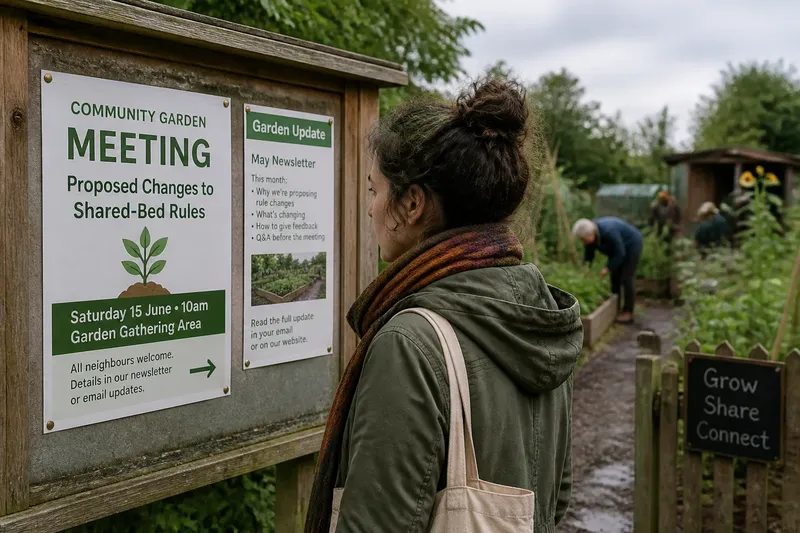
Begin with the person who will receive the message, not with the subject in the abstract. Name the situation they are in and the question, decision or misunderstanding your communication needs to address. A message about a community garden, for instance, could be for new volunteers wondering what they will be asked to do, rather than for anyone generally interested in gardening.
Write a rough note answering three prompts:
- Who needs this message?
- What do they need to understand or decide?
- What should become clearer after they read it?
Keep the answers concrete. “Raise awareness” does not name what someone should learn. “Explain how residents can borrow garden tools” does. This distinction helps prevent the sentence from trying to solve a broad subject instead of a particular communication problem.
Draft the one-sentence test
Turn your notes into a sentence with a clear subject and verb. One useful shape is: “This message helps [reader] understand [central point] so they can [relevant next move].” Treat that as scaffolding, not a formula you must keep. The finished sentence should sound natural when spoken aloud.
Say you are writing a notice for people who have recently moved into a block of flats. Your notes say they need to know where to put cardboard, because loose boxes obstruct the shared hallway. A working sentence might be: “New residents need to flatten cardboard and use the marked recycling area so the hallway stays clear.” The sentence identifies the reader, the action and its reason; it does not yet dictate the final wording or format.
Prefer familiar words to abstract terms. If your sentence contains “facilitate”, “engagement” or several clauses joined by “and”, check whether it is carrying more than one point. A simple sentence is like a label on a drawer: it helps you see what belongs there without telling you how to arrange everything inside.
Check its centre
Read the sentence and ask what the reader should be able to repeat afterwards. If you get two answers, or have to add “and also”, the message may contain competing aims. You can either choose the primary aim and leave the other for a separate communication, or write a sentence that shows how the aims connect.
Next, distinguish the central idea from supporting information. In the recycling notice, the location of the marked area and the instruction to flatten boxes support the action. A welcome message from the building manager might be pleasant, but it does not help explain that action. It may belong elsewhere.
Do not force every message into a single action. Some communications need to explain a relationship, clarify a change or compare options. The test still applies: the sentence should name the one understanding that holds those parts together, rather than pretending they are all separate main points.
Stress-test the sentence?
Is the reader clear?
Look for a real group or role, not “everyone”. If the message is for people affected by a particular change, name them in your working sentence so you can judge whether the examples and language fit.
Can you point to the main idea?
Underline the words that state what the reader should understand or do. If none stand out, rewrite the sentence around the point rather than the topic.
Does the reason belong?
A reason can make an instruction more meaningful, but it should support the same point. If it introduces a separate concern, decide whether that concern needs its own message.
Would a reader know what to do next?
Some messages are meant to prompt action; others are meant to explain. If action is part of the purpose, make the next move specific enough to recognise, such as replying to a named contact or using a labelled collection point.
Use it while drafting
Keep the sentence where you can see it as you write. For every paragraph, image, example or call to action, ask what job it does in relation to the sentence. It might explain a term, answer a likely question, give evidence, or make the next move clearer. If you cannot name the job, the material may be a distraction.
That does not mean every line must repeat the central idea. A draft needs explanation and context; the test is whether those parts help the reader reach the intended understanding. For the recycling notice, a short note saying that the marked area is beside the entrance could make the instruction usable. A long account of the building’s recycling policy may not.
Check the sentence again after the draft exists. Writing often reveals that the intended point was too broad, or that the material has uncovered a more useful one. Revise the working sentence to match the message you are actually making, then remove or reshape passages that no longer serve it.
Let the sentence guide choices
Once the central idea is stable, use it to assess tone, detail and order. If readers need a clear instruction, put the action where they can find it readily. If they need to understand a change, explain what is changing before adding background. These are choices in service of comprehension, not rules that every message must follow.
For the one-sentence test to work, keep it private if it sounds like a planning note. It need not appear in the finished piece. Its value is that it gives you a steady reference while the draft grows, so a useful detail can be included and an interesting but unrelated one can be set aside.
Before sharing, compare the finished message with your sentence and ask whether a reader could reasonably take away the point you intended. If the answer is unclear, adjust the sentence or the draft. The one-sentence test is most useful when it remains a question you can return to, not a promise that every reader will respond in exactly the same way.